Nobel Prize under fire: is dark energy real?
Why this matters right now 🌌 A core pillar of modern cosmology is that the universe’s expansion is accelerating, a result tied to dark energy and honored…
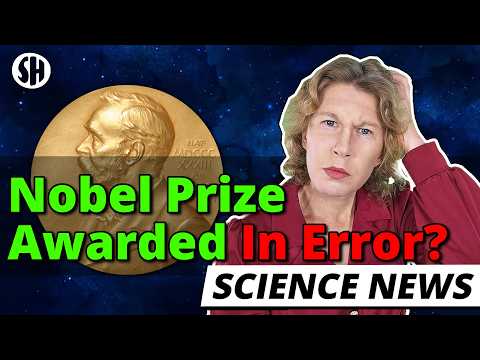
Why this matters right now 🌌
A core pillar of modern cosmology is that the universe’s expansion is accelerating, a result tied to dark energy and honored with the 2011 Nobel Prize. A newer reanalysis argues that the famous supernova evidence may be skewed by overlooked systematics, raising the uncomfortable possibility that the “speed-up” could be an artifact rather than a discovery.
What you’ll see in this video 🔭
The video walks through a three-way scientific clash: the original supernova-based case for acceleration, a recent critique claiming the signal disappears once galaxy-age effects are handled correctly, and a rebuttal from a team including two Nobel laureates—followed by a rebuttal-to-the-rebuttal and a separate supporting reanalysis using another dataset.
Key insights (and why it’s messy)
At the center is how Type Ia supernovae are standardized and how their host galaxies evolve over cosmic time. If younger galaxies systematically change supernova brightness, distance estimates can drift, mimicking acceleration. The creator argues that galaxy formation models are flexible and uncertain, so today’s data may still be too weak to settle the question cleanly.
Closing thought
You’ll leave with a sharper sense of where the dark-energy case is most vulnerable—and what would actually count as a decisive test.