The Matrix’s Biggest Lie: Why You’re Not Actually Free
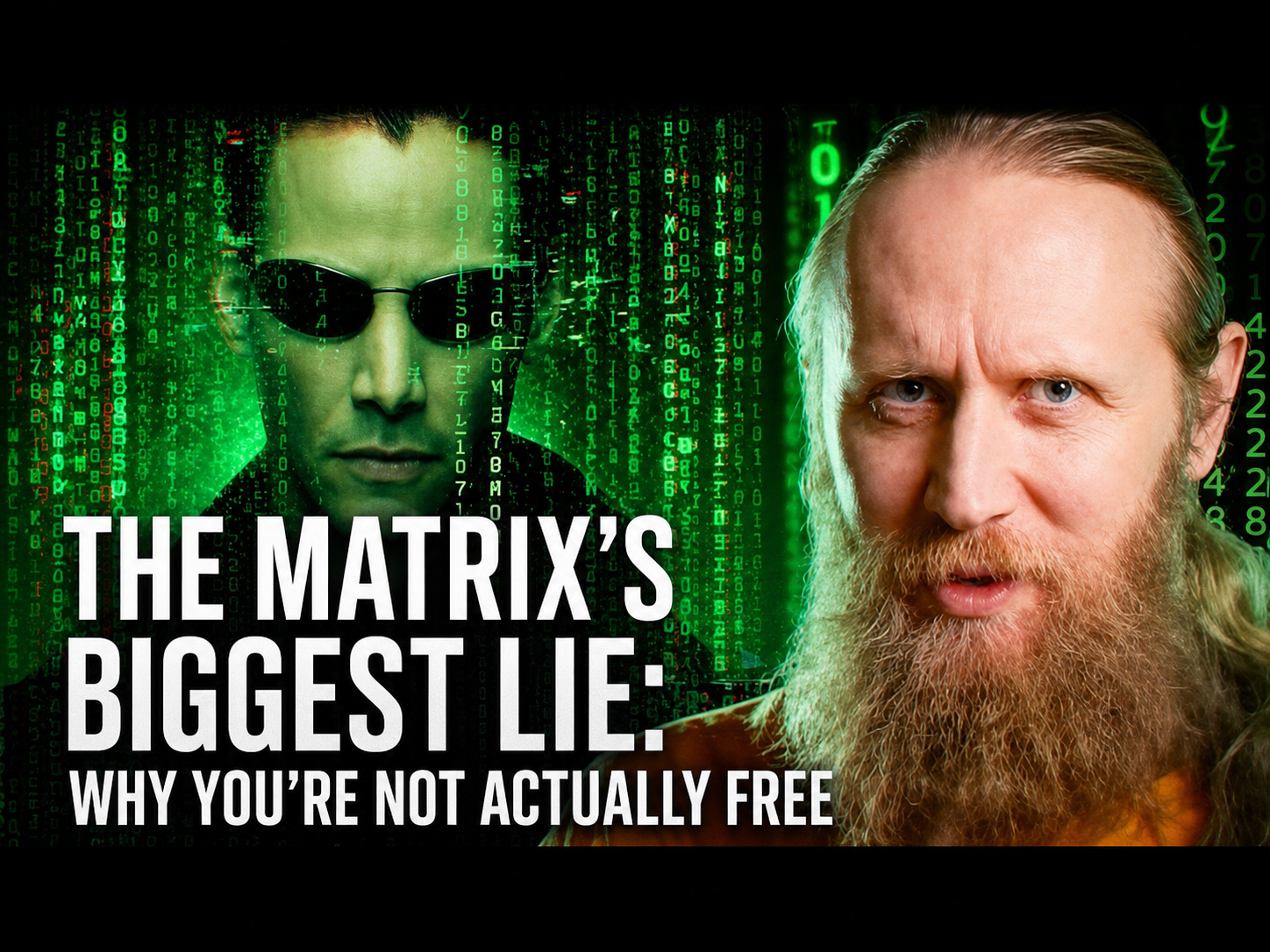
Why this matters right now The video argues that what you call “reality” is largely a brain-made simulation—and that’s why freedom can feel unreachable. Your…
Why this matters right now
The video argues that what you call “reality” is largely a brain-made simulation—and that’s why freedom can feel unreachable. Your choices often happen inside invisible defaults: perception limits, attention filters, and identity habits. If you don’t notice the filters, you can’t steer them. 🧠
What you’ll see
Starting with the famous “there is no spoon” moment from The Matrix, the speaker reframes it as a practical lesson: the world you experience is a constructed output, not direct contact with things “as they are.” He blends neuroscience, philosophy, and meditation stories, moving from vision mechanics to deeper claims about time, space, and self.
Key insights (science + philosophy)
You only see a tiny sharp slice of the visual field; the brain fills in the rest. Attention can erase obvious events (the “gorilla” experiment), and even body ownership can be rewritten (the rubber hand illusion). From there, he links Kant and Einstein to yogic ideas: space-time and personality are frameworks the mind uses, not absolute givens.
Where it leads
Meditation is presented as “peeling layers” of experience—quieting senses, stopping inner chatter, reaching states of light and bliss, and finally approaching what language can’t describe. The payoff is a clearer ability to distinguish automatic perception from lived awareness. 🌿✨