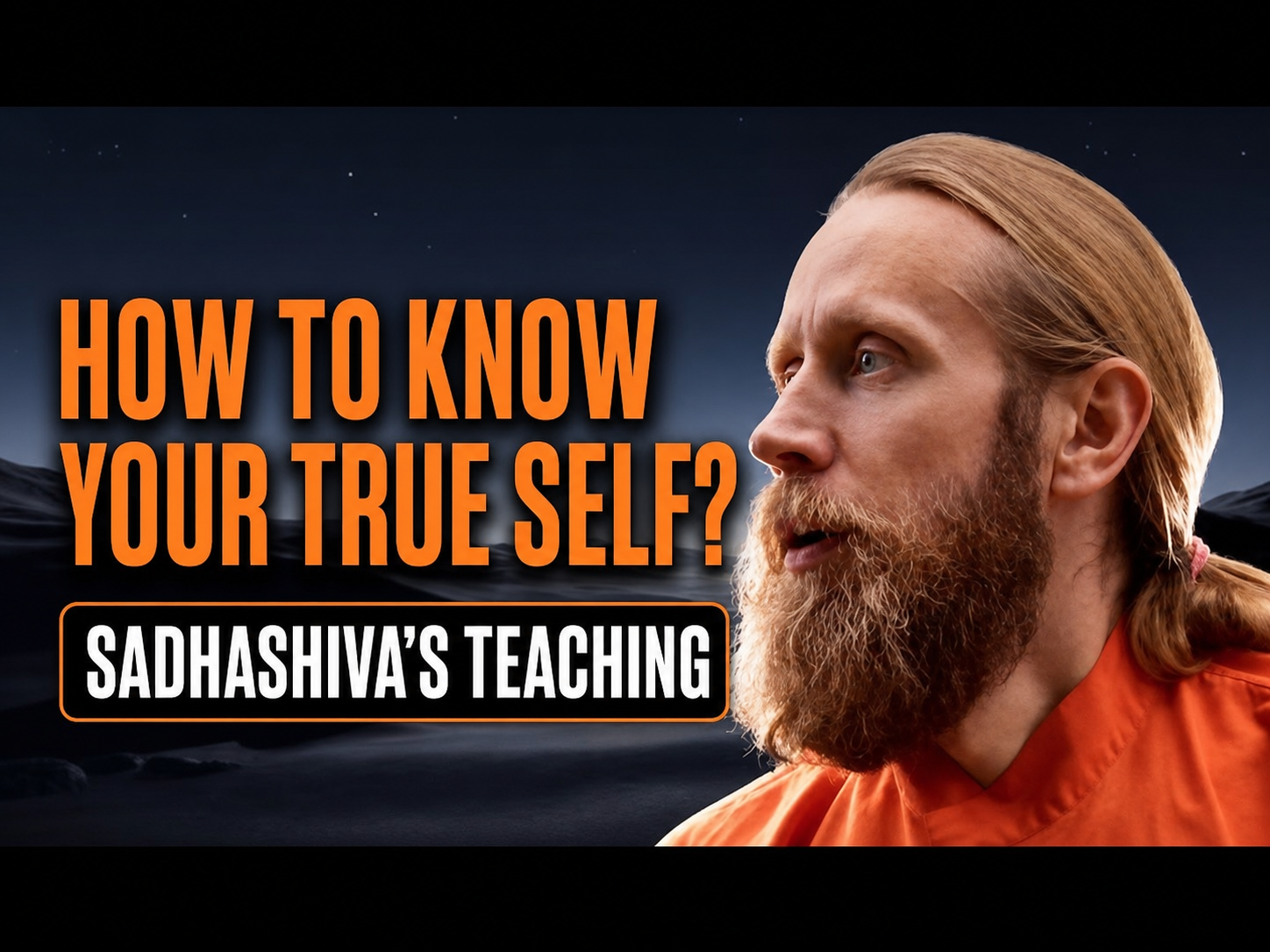
Sadhashiva’s Teaching: How to Know Your True Self? (Shivopadesha 1)
Why this matters now Most of what we “feed” the mind targets basic impulses—fear, desire, status, and entertainment—and then we wonder why life feels flat.…
Why this matters now
Most of what we “feed” the mind targets basic impulses—fear, desire, status, and entertainment—and then we wonder why life feels flat. The speaker argues the mind is like a stomach: if you consume shallow inputs, you’ll produce shallow outputs. Choosing “philosophical diamonds” can rewire attention and restore inner intensity.
What you’ll see in this episode
This lecture continues a series on Shivopadesha (“Shiva’s instruction”) through the lens of the author’s guru’s commentary. A central Sanskrit verse is introduced to claim that only atma-jnana—knowledge of the Self—counts as real knowledge; other forms are reflections that don’t reveal the essence.
Key insights and metaphors
Two modes of knowing are contrasted: paravidya (moving from many to One, toward the subject) and aparavidya (analytic, object-based knowledge). A phone metaphor maps reality into “hardware,” “software,” and the “user,” showing why studying parts doesn’t automatically explain the experiencer. The talk also pairs apophatic practice (“I am not this”) with cataphatic affirmation (mantra), presented as complementary steps in meditation. 🧠📱
Closing thought
The payoff is a clearer map for combining inner liberation with practical service—without confusing shadows for the source. 🕯️